Health Cover With Pre-Existing Conditions in Kenya
"Sorry, we can't cover you. Pre-existing condition."
My uncle heard this from 4 different insurers.
He has diabetes.
Diagnosed 3 years ago.
Controlled with medication.
Still couldn't get health insurance.
Or so he thought.
Turns out, you can get health insurance with pre-existing conditions in Kenya.
You just need to know how.
Table of Contents
- What Are Pre-Existing Conditions?
- Why Insurers Care About Pre-Existing Conditions
- Can You Get Health Insurance with Pre-Existing Conditions?
- Waiting Periods Explained
- Premium Loading (Extra Costs)
- Best Insurance Companies for Pre-Existing Conditions
- How to Disclose Pre-Existing Conditions
- What If You're Rejected?
- Corporate/Group Insurance: The Best Loophole
- Conditions Usually Excluded (Permanently)
- How to Manage Costs with Pre-Existing Conditions
- Real Case Studies
- What About SHA (Social Health Authority)?
- How Waiting Periods Are Enforced
- Can You Switch Insurers with Pre-Existing Conditions?
- Questions to Ask Before Buying
- The Medical Exam Option
- Don't Let Pre-Existing Conditions Stop You
- Next Steps
What Are Pre-Existing Conditions?
Simple definition:
Any health condition you had before buying insurance.
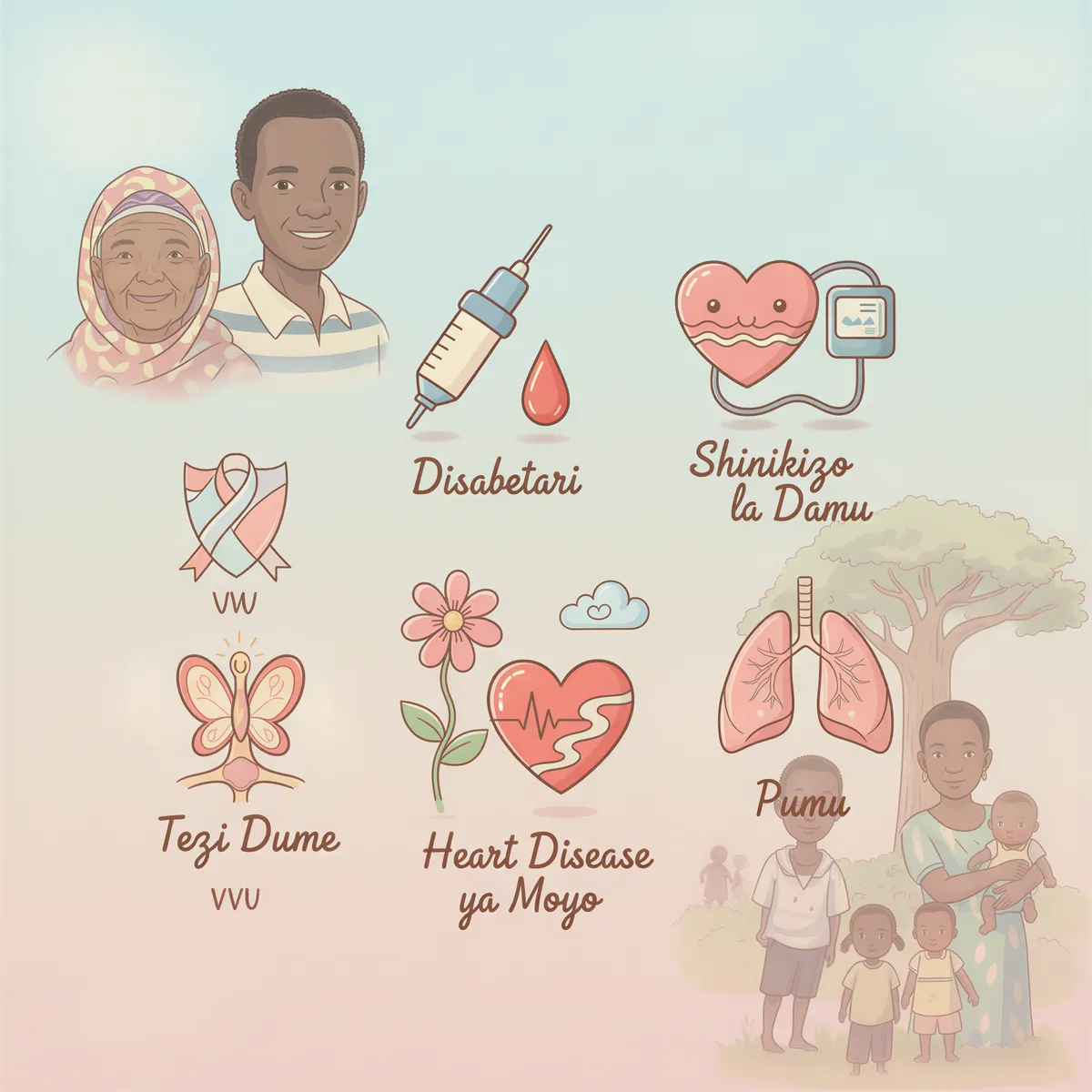
Common pre-existing conditions in Kenya:
- Diabetes
- Hypertension (high blood pressure)
- Asthma
- Heart disease
- Kidney disease
- Cancer (in remission)
- HIV/AIDS
- Thyroid disorders
- Arthritis
- Chronic back pain
Key point: If you were diagnosed or treated for it before applying, it's pre-existing.

Why Insurers Care About Pre-Existing Conditions
It's about risk.
Pre-existing conditions = higher chance of claims.
Example:
- Healthy person: KES 5,000/year in claims (average)
- Person with diabetes: KES 50,000 - 100,000/year in claims
Insurers aren't charities. They're businesses.
They price based on risk.
Can You Get Health Insurance with Pre-Existing Conditions?
Yes. But with conditions.
Three scenarios:
Scenario 1: Buying New Insurance (Pre-Existing Condition Known)
What happens:
- Insurer will ask about medical history
- You declare your condition
- They assess risk
- They either:
- Accept with waiting period (12-24 months)
- Accept with higher premium (20-50% more)
- Accept with exclusion (won't cover that condition)
- Reject outright (rare, but happens)
Scenario 2: Already Have Insurance, Then Get Diagnosed
What happens:
- Condition is covered immediately
- No waiting period
- Normal premiums
This is why you buy insurance BEFORE you get sick.
Scenario 3: Group/Corporate Insurance
What happens:
- Usually accepted without individual medical exams (if group is 10+ employees)
- Pre-existing conditions covered after 12-month waiting period
- Premiums spread across entire group
Best option if you have pre-existing conditions.

Waiting Periods Explained
Most insurers impose waiting periods for pre-existing conditions.
How it works:
Example: Diabetes
- Buy insurance in January 2026
- Waiting period: 12 months
- Diabetes-related claims covered from: January 2027
- Everything else covered immediately
Standard waiting periods:
- Chronic conditions: 12-24 months
- Minor conditions: 3-6 months
- Maternity: 10-12 months (not pre-existing, but has waiting period)
During the waiting period:
- You still pay premiums
- Other conditions are covered
- Just not the pre-existing one

Premium Loading (Extra Costs)
Some insurers charge higher premiums instead of (or in addition to) waiting periods.
Example:
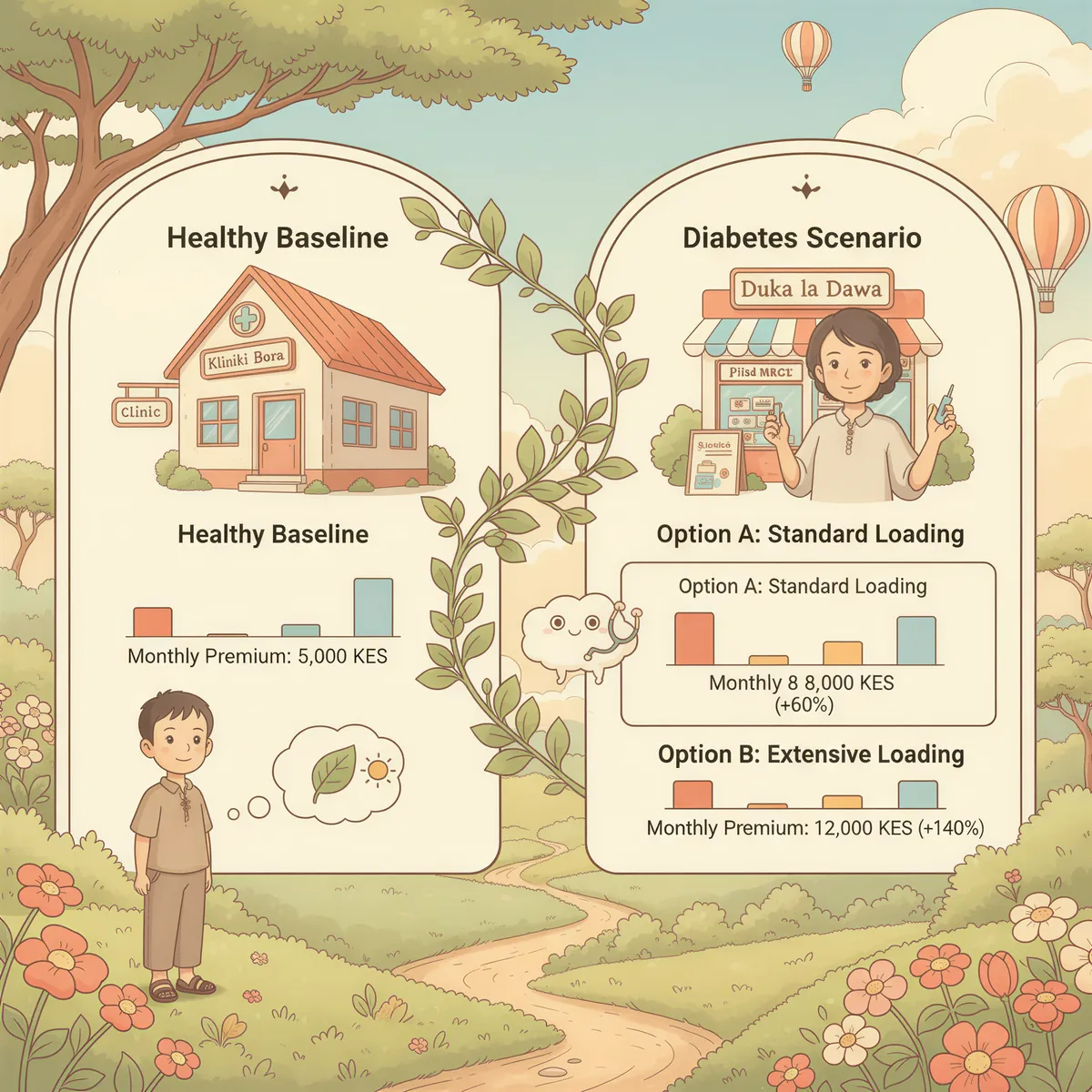
Standard premium (healthy person): KES 40,000/year
With diabetes:
- Option A: KES 55,000/year + 12-month waiting period
- Option B: KES 65,000/year + no waiting period
- Option C: KES 40,000/year + diabetes permanently excluded
Loading percentages:
- Mild hypertension: +10-20%
- Controlled diabetes: +20-40%
- Heart disease: +40-60%
- Multiple conditions: +50-100%
Best Insurance Companies for Pre-Existing Conditions
Not all insurers are equal. Some specialize in this.
1. Madison Insurance (Best Overall)
Why they're good:
- Specialize in chronic illness
- Flexible underwriting
- Willing to cover most conditions
- Reasonable waiting periods (12 months)
Sample premium (with diabetes):
- Base: KES 45,000/year
- Loading: +30%
- Total: KES 58,500/year
2. Resolution Health
Why they're good:
- Transparent pricing
- Clear exclusion policies
- Good chronic disease management programs
- 12-18 month waiting periods
Sample premium (with diabetes):
- Base: KES 50,000/year
- Loading: +25%
- Total: KES 62,500/year
3. Jubilee Health Insurance
Why they're good:
- Established company
- Good hospital network
- Corporate plans often cover pre-existing (with waiting periods)
Sample premium (with diabetes):
- Base: KES 55,000/year
- Loading: +35%
- Total: KES 74,250/year
4. AAR Insurance
Why they're good:
- Largest hospital network
- Good for multiple chronic conditions
- Corporate plans include pre-existing conditions
Sample premium (with diabetes):
- Base: KES 60,000/year
- Loading: +30%
- Total: KES 78,000/year
Note: AAR is pricier but gives you the widest hospital access.

How to Disclose Pre-Existing Conditions
Rule #1: ALWAYS disclose.
Why?
If you lie:
- Insurer can void your policy
- Claims get rejected
- You lose all premiums paid
- You could face fraud charges
Not worth it.
What to disclose:
✔ Current medications ✔ Past surgeries ✔ Chronic conditions (even if controlled) ✔ Family history (if asked) ✔ Hospitalizations in last 5 years
How to disclose:
Most insurers will ask you to fill a medical questionnaire.
Be honest. Be thorough.
If unsure, ask your doctor for a medical summary.

What If You're Rejected?
Don't panic.
Options:
Option 1: Apply to Different Insurers
Each insurer has different underwriting standards.
Madison might accept what AAR rejects.
Option 2: Join Group/Corporate Plan
If your employer offers group insurance, you're usually auto-accepted.
Option 3: Negotiate Exclusions
Can't get full cover? Ask for:
- Partial cover (exclude only the specific condition)
- Higher co-payments (you pay 20-30% of bills)
- Lower benefit limits
Option 4: Get Inpatient-Only
Skip outpatient (where most chronic condition costs are).
Focus on covering emergencies/surgeries.
Option 5: Wait and Re-Apply
Get your condition under control.
Show 1-2 years of good management.
Re-apply with medical reports.
Corporate/Group Insurance: The Best Loophole
This is the easiest way to get covered.
How group insurance works:
- Employer buys group plan for 10+ employees
- Insurer doesn't assess each person individually
- Pre-existing conditions covered after 12-month waiting period
- Everyone pays the same premium (or based on age bands)
Example:
- Company has 20 employees
- 5 have diabetes, hypertension, or asthma
- All get covered
- Waiting period: 12 months for pre-existing
- Premium: KES 35,000/employee (same for everyone)
If you have pre-existing conditions, prioritize jobs with group health insurance.

Conditions Usually Excluded (Permanently)
Some conditions are never covered. Even with waiting periods.
Commonly excluded:
- HIV/AIDS (some insurers cover, most don't)
- Terminal illnesses
- Mental health conditions (schizophrenia, bipolar — though this is changing)
- Congenital conditions (present from birth)
- Self-inflicted injuries
- Drug/alcohol abuse-related conditions
Always check the exclusion list before buying.
How to Manage Costs with Pre-Existing Conditions
Tip 1: Buy Insurance Early
Before diagnosis = no loading, no waiting periods.
Don't wait until you're sick.
Tip 2: Choose Higher Co-Payments
Agree to pay 20-30% of claims yourself.
Premium drops significantly.
Tip 3: Skip Outpatient
Most chronic condition costs = outpatient (checkups, medication).
If you can afford outpatient out-of-pocket, buy inpatient-only.
Saves 30-40%.
Tip 4: Use Generic Medication
Branded diabetes meds: KES 5,000/month Generic: KES 1,500/month
Same active ingredient. Huge savings.
Tip 5: Join Support Programs
Many insurers offer chronic disease management programs:
- Free checkups
- Medication reminders
- Health coaching
- Discounted medication
Use them.
Real Case Studies
Case 1: James, 45, Diabetes (Type 2)
Challenge: 3 insurers rejected him
Solution:
- Applied to Madison
- Accepted with 12-month waiting period
- Premium: KES 62,000/year (+35% loading)
- After 12 months, full coverage
Outcome: Hospitalized for diabetic foot ulcer (Year 2). Claim: KES 150,000. Fully covered.
Case 2: Mary, 38, Hypertension
Challenge: Jubilee wanted 20% loading + 18-month waiting
Solution:
- Joined corporate plan through new employer
- 12-month waiting period
- Premium: Same as everyone (KES 35,000/year)
Outcome: Full coverage after 12 months. No extra costs.
Case 3: Peter, 52, Heart Disease
Challenge: Most insurers rejected outright
Solution:
- Bought inpatient-only (excluded cardiac-related)
- Covers other emergencies
- Premium: KES 45,000/year
Outcome: Not perfect, but better than nothing. Covers accidents, infections, other conditions.
What About SHA (Social Health Authority)?
SHA covers everyone. Including pre-existing conditions.
What SHA covers:
- Public hospital care
- Basic medication
- Chronic disease management (at government facilities)
What SHA doesn't cover:
- Private hospitals
- Advanced treatments
- Fast service
- Private rooms
Strategy: Use SHA for your pre-existing condition. Use private insurance for everything else (with exclusions).
How Waiting Periods Are Enforced
Insurer tracks this closely.
Example:
You buy insurance in March 2026. Waiting period: 12 months for diabetes.
April 2026: You go for diabetes checkup. Result: Claim rejected. "Waiting period not complete."
March 2027: Waiting period ends.
April 2027: You go for diabetes checkup. Result: Claim approved.
Pro tip: Mark your calendar. Don't file claims during waiting periods. Waste of time.
Can You Switch Insurers with Pre-Existing Conditions?
Yes. But...
What happens:
New insurer treats your condition as pre-existing.
Even if old insurer was covering it.
New waiting period applies.
Example:
- Insurer A covered your diabetes (after 12-month wait)
- You switch to Insurer B
- Insurer B imposes new 12-month waiting period
Lesson: Don't switch insurers unless absolutely necessary.
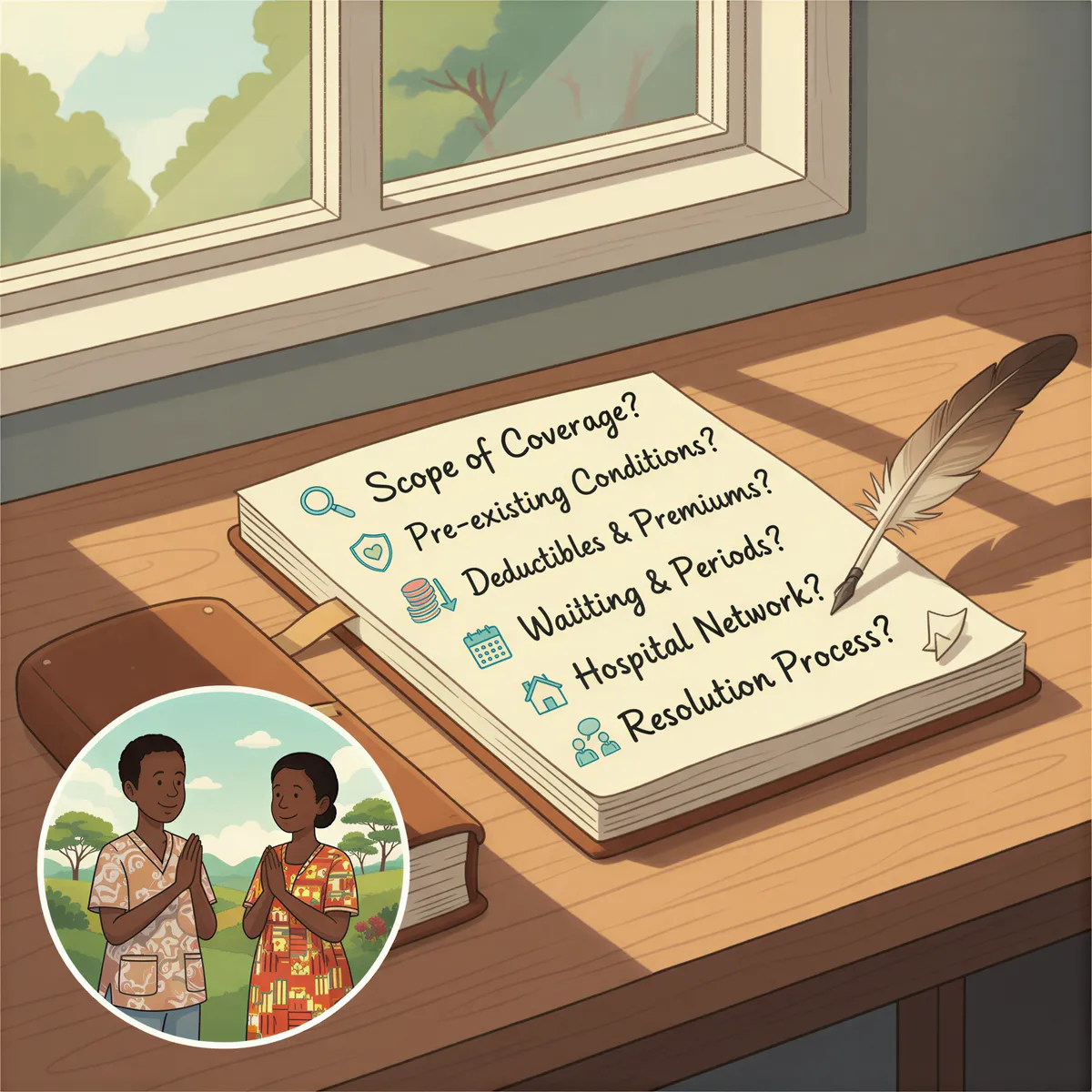
Questions to Ask Before Buying
- "Is my condition covered or excluded?"
- "What's the waiting period?"
- "Is there premium loading? How much?"
- "Can I get a medical exam to reduce loading?"
- "Are there disease management programs?"
- "What happens at renewal?" (Some insurers increase loading annually)
Get answers in writing.
The Medical Exam Option
Some insurers offer:
"Take a medical exam. If results are good, we'll reduce loading."
How it works:
- You get blood tests, BP check, etc.
- If condition is well-controlled, loading drops
- If condition is worse than disclosed, loading increases (or rejection)
Worth it? Yes, if your condition is well-managed.
Don't Let Pre-Existing Conditions Stop You
Yes, it's harder. Yes, it's more expensive. But it's not impossible.
Worst mistake: Not buying insurance because you have a pre-existing condition.
Some coverage > no coverage.
Even with exclusions. Even with waiting periods.
Start now.
Apply to multiple insurers.
Join group plans if possible.
Get covered.
Next Steps
- List all your pre-existing conditions
- Get medical reports from your doctor
- Apply to 3-4 insurers (Madison, Resolution, Jubilee, AAR)
- Compare:
- Waiting periods
- Premium loading
- Coverage terms
- Choose the best offer
- Disclose everything honestly
- Mark your waiting period end date
- Use insurance once eligible
You deserve health insurance.
Pre-existing condition or not.
Start Generating Quotes in Minutes
Compare quotes from Kenya's leading insurers and send a client a proposal in under a minute.
No credit card required.
Get quotes from 40+ underwriters in under 30 seconds.
All quotes meet Insurance Regulatory Authority standards.
Never miss a commission payment with automatic tracking.