Outpatient vs Inpatient Cover in Kenya: Which to Buy
A friend called me last week.
"My kid has malaria. Again. Third time this year. Insurance won't cover it."
"Do you have outpatient cover?" I asked.
"What's that?"
And that's the problem.
Most Kenyans buy health insurance thinking they're covered for everything.
Then they find out they only have inpatient cover.
Let me break it down.
Inpatient vs Outpatient: The Simple Explanation
Inpatient cover = Hospital admission
You get admitted. You stay overnight (or longer). Insurance pays.
Outpatient cover = Doctor visits (no admission)
You go to the hospital, see a doctor, get treated, go home same day. Insurance pays.
That's it.
Most confusion comes from not understanding this basic difference.

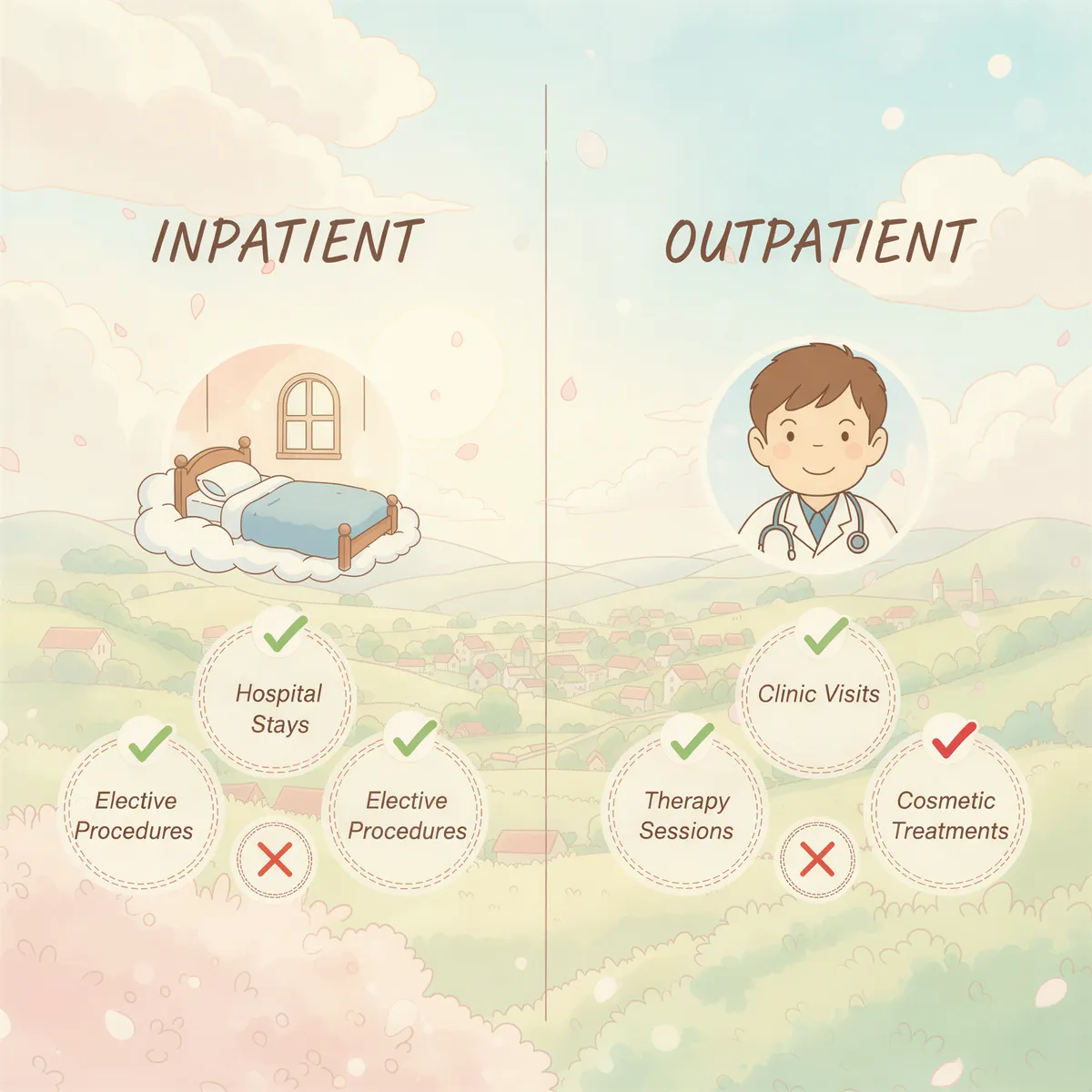
Table of Contents
- What Inpatient Cover Actually Includes
- What Outpatient Cover Actually Includes
- The Cost Difference
- Real-Life Scenarios: What Gets Covered?
- Which One Do You Actually Need?
- What Most Kenyans Actually Buy
- How Often Will You Actually Use Each?
- Sub-Limits You Need to Know
- Can You Buy Them Separately?
- What About SHA (Social Health Authority)?
- Common Mistakes People Make
- How to Maximize Your Outpatient Cover
- What Happens If You Hit Your Annual Outpatient Limit?
- Can You Add Outpatient Later?
- Outpatient vs Inpatient: Claims Process
- Best Insurers for Outpatient Cover
- Can You Have Inpatient from One Insurer and Outpatient from Another?
- Final Verdict: Which Is More Important?
- Next Steps
What Inpatient Cover Actually Includes
What's Covered:
✔ Hospital admission (emergency or planned) ✔ Surgery and procedures ✔ ICU/HDU care ✔ Medication during admission ✔ Doctor's fees ✔ Diagnostic tests (while admitted) ✔ Hospital meals and accommodation ✔ Nursing care
What's NOT Covered:
✘ Regular doctor visits (without admission) ✘ Prescription drugs (outside hospital) ✘ Lab tests (unless admitted) ✘ Specialist consultations (unless admitted)
Think of it as: Emergency and serious illness cover.
What Outpatient Cover Actually Includes
What's Covered:
✔ Doctor consultations ✔ Lab tests (blood tests, urine tests, etc.) ✔ X-rays, ultrasounds, scans ✔ Prescription medication ✔ Specialist referrals (cardiologist, dermatologist, etc.) ✔ Physiotherapy ✔ Minor procedures (no admission needed) ✔ Chronic disease management (diabetes, hypertension checkups)
What's NOT Covered:
✘ Hospital admission ✘ Surgery ✘ ICU care
Think of it as: Day-to-day medical care.
The Cost Difference
Here's what you'll pay in Kenya (2026):
Individual Plans
| Coverage Type | Annual Premium |
|---|---|
| Inpatient only | KES 20,000 - 30,000 |
| Outpatient only | KES 15,000 - 25,000 |
| Inpatient + Outpatient | KES 40,000 - 55,000 |
Family Plans (Couple + 2 Kids)
| Coverage Type | Annual Premium |
|---|---|
| Inpatient only | KES 45,000 - 60,000 |
| Outpatient only | KES 30,000 - 45,000 |
| Inpatient + Outpatient | KES 75,000 - 105,000 |
Notice: Inpatient + Outpatient costs less than buying them separately.
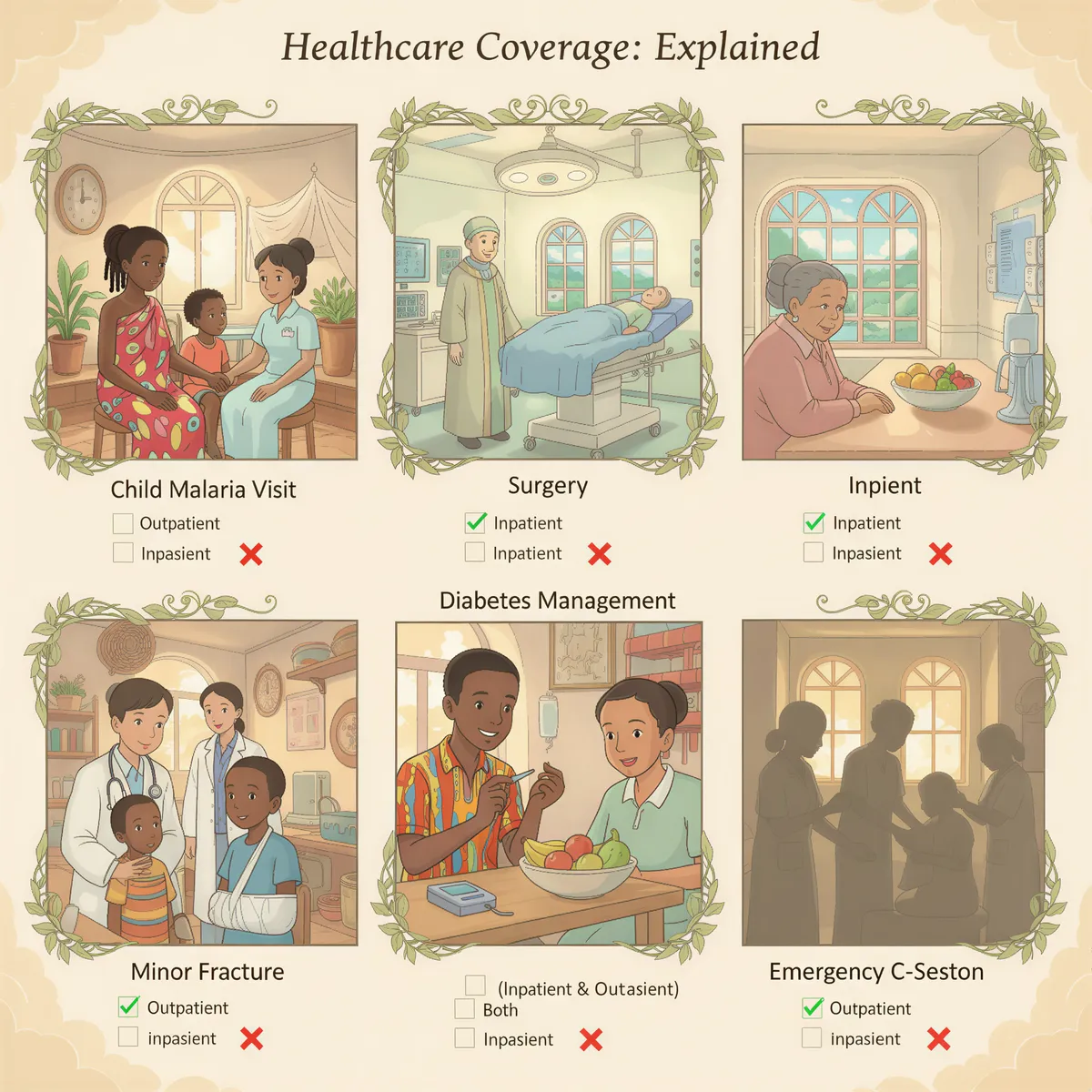
Real-Life Scenarios: What Gets Covered?
Scenario 1: Your Child Has Malaria
Treatment: Doctor visit, blood test, prescription
Covered by:
- ✔ Outpatient
- ✘ Inpatient only
Cost if not covered: KES 3,000 - 5,000
Scenario 2: You Need Surgery
Treatment: Hospital admission, surgery, 3 days in hospital
Covered by:
- ✔ Inpatient
- ✔ Inpatient + Outpatient
Cost if not covered: KES 150,000 - 300,000
Scenario 3: You Have Diabetes (Regular Checkups)
Treatment: Monthly doctor visits, blood sugar tests, medication
Covered by:
- ✔ Outpatient
- ✘ Inpatient only
Annual cost if not covered: KES 60,000+
Scenario 4: You Break Your Leg (Minor Fracture)
Treatment: X-ray, cast, painkillers, go home same day
Covered by:
- ✔ Outpatient
- ✘ Inpatient only (unless you're admitted)
Cost if not covered: KES 15,000 - 25,000
Scenario 5: Emergency C-Section
Treatment: Surgery, 3-day hospital stay, medication
Covered by:
- ✔ Inpatient + Maternity
- ✘ Inpatient without maternity add-on
- ✘ Outpatient only
Cost if not covered: KES 120,000 - 200,000
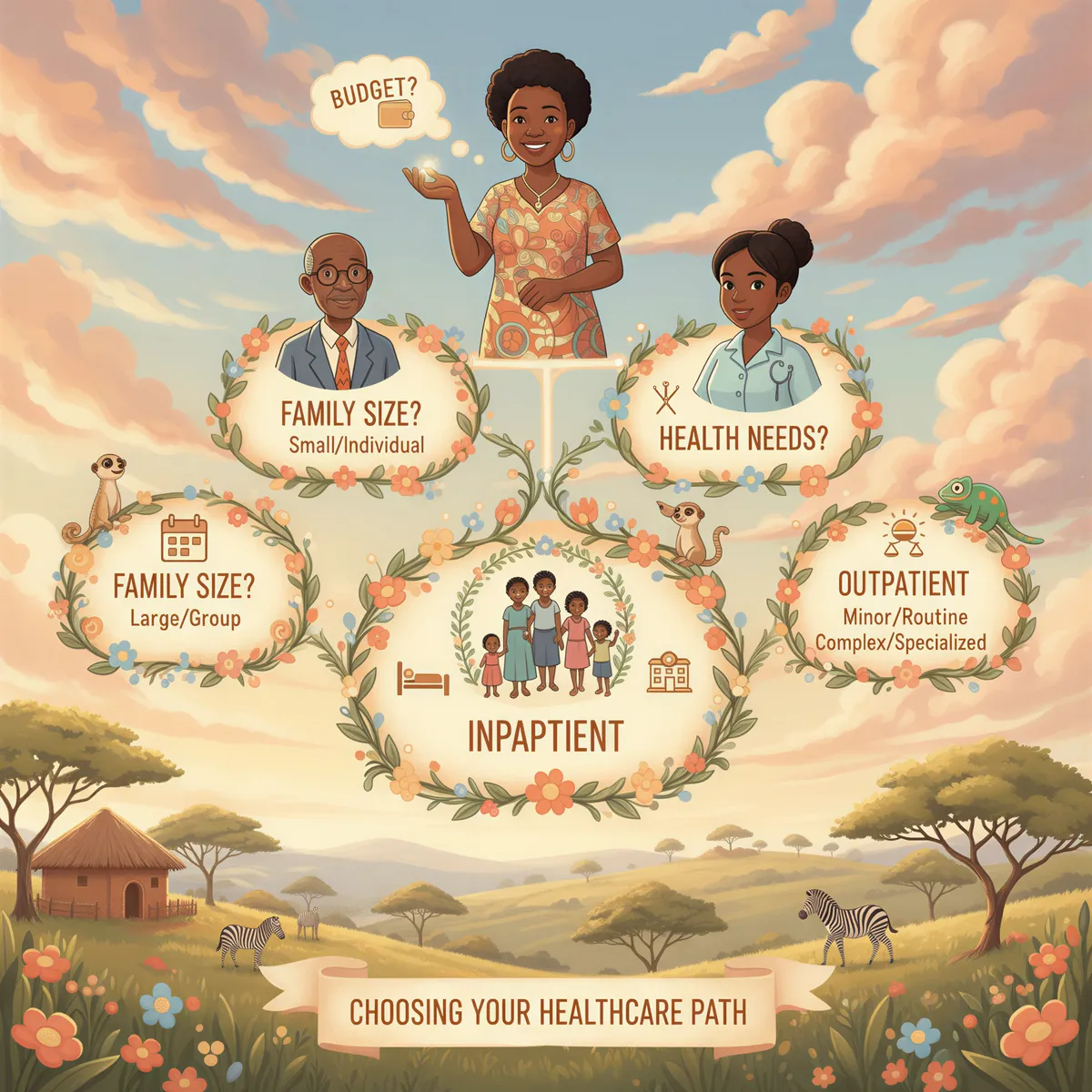
Which One Do You Actually Need?
Choose Inpatient Only If:
- You're young and healthy
- You rarely get sick
- You can afford to pay for doctor visits out of pocket
- You're on a tight budget
- You just want emergency cover
Choose Outpatient Only If:
- You have a chronic condition (diabetes, hypertension)
- Your kids get sick often
- You prefer preventive care
- You already have employer inpatient cover
Choose Both (Inpatient + Outpatient) If:
- You have young kids
- You want complete coverage
- You can afford it
- You visit doctors 3+ times/year
- Peace of mind matters to you
Honest recommendation: If you can afford it, get both. The cost difference isn't huge, and you'll use outpatient way more often.
What Most Kenyans Actually Buy
Stats from major insurers (2026):
- 50% buy Inpatient + Outpatient
- 35% buy Inpatient only
- 10% buy Outpatient only
- 5% don't buy at all (big mistake)
The trend: More people are adding outpatient as they realize how often they actually need it.
How Often Will You Actually Use Each?
Inpatient: 0-2 times in 5 years (hopefully) Outpatient: 5-15 times per year
Why outpatient matters:
- Kids get sick (a lot)
- Minor illnesses (flu, infections, etc.)
- Chronic disease management
- Preventive checkups
You'll use outpatient way more often than inpatient.
Sub-Limits You Need to Know
Even with cover, there are limits on what insurance pays.
Typical Inpatient Sub-Limits:
- Surgery: KES 500,000 max
- ICU: KES 30,000 - 50,000/day
- Doctor fees: KES 10,000 - 20,000/day
- Medication: Usually covered in full
Typical Outpatient Sub-Limits:
- Annual limit: KES 50,000 - 150,000/year
- Doctor visit: KES 2,000 - 5,000 per visit
- Lab tests: KES 5,000 - 10,000/year
- Prescriptions: KES 1,500 - 3,000 per visit
Pro tip: Check these limits before buying. Some insurers are way more generous than others.
Can You Buy Them Separately?
Yes.
But here's the thing:
Buying them together costs 20-30% less than buying separately.
Example:
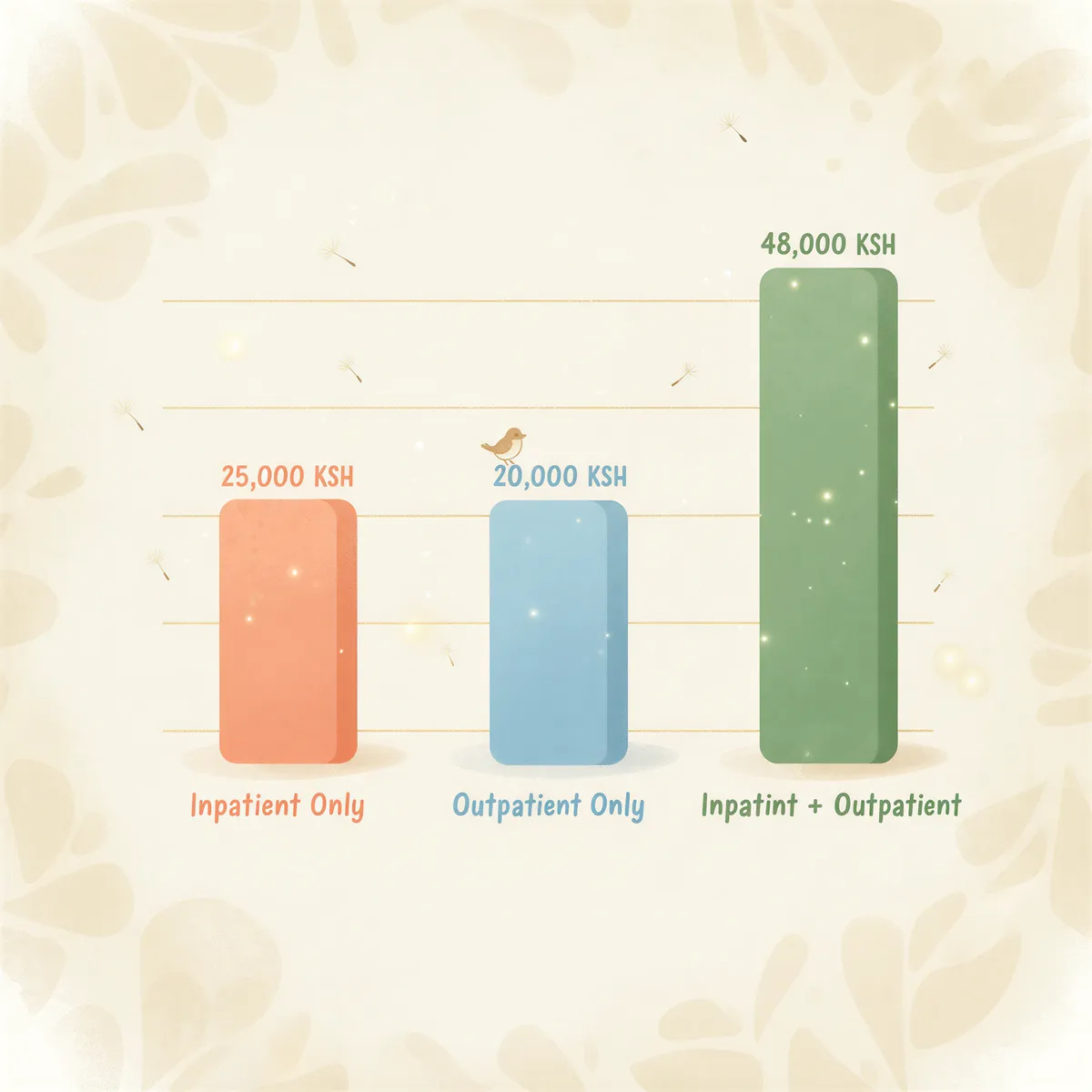
-
Inpatient only: KES 25,000
-
Outpatient only: KES 20,000
-
Total if separate: KES 45,000
-
Inpatient + Outpatient bundle: KES 35,000
-
Savings: KES 10,000
Always ask for the bundled rate.
What About SHA (Social Health Authority)?
SHA covers inpatient in public hospitals.
But:
- Long queues
- Shared wards
- Limited medication
- No private hospitals
- No outpatient (except at government clinics)
Private insurance adds:
- Private hospitals
- Fast service
- Private rooms
- Full outpatient access
You need both. SHA as base. Private insurance as upgrade.
Common Mistakes People Make
Mistake 1: Buying Inpatient Only (Then Complaining)
"Insurance doesn't cover anything!"
Because you only have inpatient. Outpatient = separate benefit.
Mistake 2: Not Reading the Fine Print
"I thought everything was covered!"
Check what's included. Every plan has exclusions.
Mistake 3: Not Using Outpatient (Because They Forget They Have It)
You're paying for it. Use it.
- Annual checkups
- Kids' illnesses
- Chronic disease monitoring
Mistake 4: Waiting Until Sick to Buy Outpatient
Pre-existing conditions = waiting periods. Buy before you need it.
How to Maximize Your Outpatient Cover
Tip 1: Use It for Preventive Care
Annual checkups, health screenings, vaccinations — all covered.
Tip 2: Buy Generic Medication
Same drug, cheaper cost. Saves your annual limit.
Tip 3: Visit In-Network Hospitals
Out-of-network = you pay upfront and claim later. In-network = cashless.
Tip 4: Track Your Limit
Most insurers have apps/portals. Check how much you've used.
Tip 5: Don't Abuse It
Running to the doctor for every sneeze? You'll hit your limit fast.
What Happens If You Hit Your Annual Outpatient Limit?
Most outpatient plans have annual limits (e.g., KES 100,000/year).
What happens if you exceed it?
Option 1: Pay out of pocket for the rest of the year Option 2: Top-up plans (some insurers offer this) Option 3: Wait until renewal (limit resets)
Pro tip: If you have chronic conditions, choose plans with higher outpatient limits (KES 150,000 - 250,000/year).
Can You Add Outpatient Later?
Yes, at renewal.
But:
- May require medical questionnaire
- Possible waiting periods (3-6 months)
- Premium recalculation
Better strategy: Add it from day one.
Outpatient vs Inpatient: Claims Process
Inpatient Claims (Usually Cashless):
- Get pre-authorization from insurer (24-48 hours before admission)
- Hospital admits you
- Hospital bills insurer directly
- You pay co-payment (if any)
Easy. Straightforward.
Outpatient Claims (Can Be Cashless or Reimbursement):
Cashless (In-Network):
- Visit approved hospital
- Show insurance card
- Hospital bills insurer directly
- You walk out
Reimbursement (Out-of-Network):
- Pay upfront
- Submit claim (receipts, doctor's note)
- Insurer processes (7-21 days)
- Money refunded to your account
Pro tip: Always use in-network hospitals for outpatient. Cashless is way easier.
Best Insurers for Outpatient Cover
Based on limits, network, and claims speed:
Best Overall:
- AAR Insurance — Highest outpatient limits (KES 150,000+), largest network
Best Value:
- Britam — Affordable, decent limits (KES 100,000)
Best for Families:
- Jubilee — Great for kids' outpatient, solid limits
Best for Chronic Conditions:
- Madison — Specializes in chronic illness management
Can You Have Inpatient from One Insurer and Outpatient from Another?
Yes.
But not recommended.
Reasons:
- More expensive (lose bundling discount)
- More admin (two policies, two renewals)
- Coordination issues (if you're admitted after outpatient treatment)
Stick with one insurer for both.
Final Verdict: Which Is More Important?
Honest answer: It depends.
For emergencies: Inpatient is critical. One surgery without insurance = financial disaster.
For regular life: Outpatient is more useful. You'll use it 10x more often.
Best strategy: Get both if you can afford it. If you can't, start with inpatient (emergencies first), then add outpatient when budget allows.
Next Steps
- Assess your needs (do you visit doctors often?)
- Check your budget
- Get quotes for:
- Inpatient only
- Outpatient only
- Inpatient + Outpatient bundle
- Compare the cost difference
- Buy what makes sense for your situation
Don't overthink it.
Some coverage > no coverage.
And if you're still unsure?
Get both. You won't regret it.
Start Generating Quotes in Minutes
Compare quotes from Kenya's leading insurers and send a client a proposal in under a minute.
No credit card required.
Get quotes from 40+ underwriters in under 30 seconds.
All quotes meet Insurance Regulatory Authority standards.
Never miss a commission payment with automatic tracking.