NHIF vs Private Health Insurance: Which is Better for You?
The SHA deductions hit your payslip every month.
2.75% of your salary. Gone.
And now someone's telling you to pay more for private health insurance?
Sounds like a scam, right?
Wrong.
Let me explain why.
Table of Contents
- What Changed from NHIF to SHA?
- What SHA Actually Covers
- The SHA Reality Check
- When SHA is Enough
- When You NEED Private Insurance
- The Cost Breakdown
- The Smart Kenyan Strategy
- Real-Life Scenarios
- What Insurance Agents Won't Tell You
- The Honest Answer
- How to Choose the Right Private Insurance
- Bottom Line
What Changed from NHIF to SHA?
Quick recap for those who missed the memo:
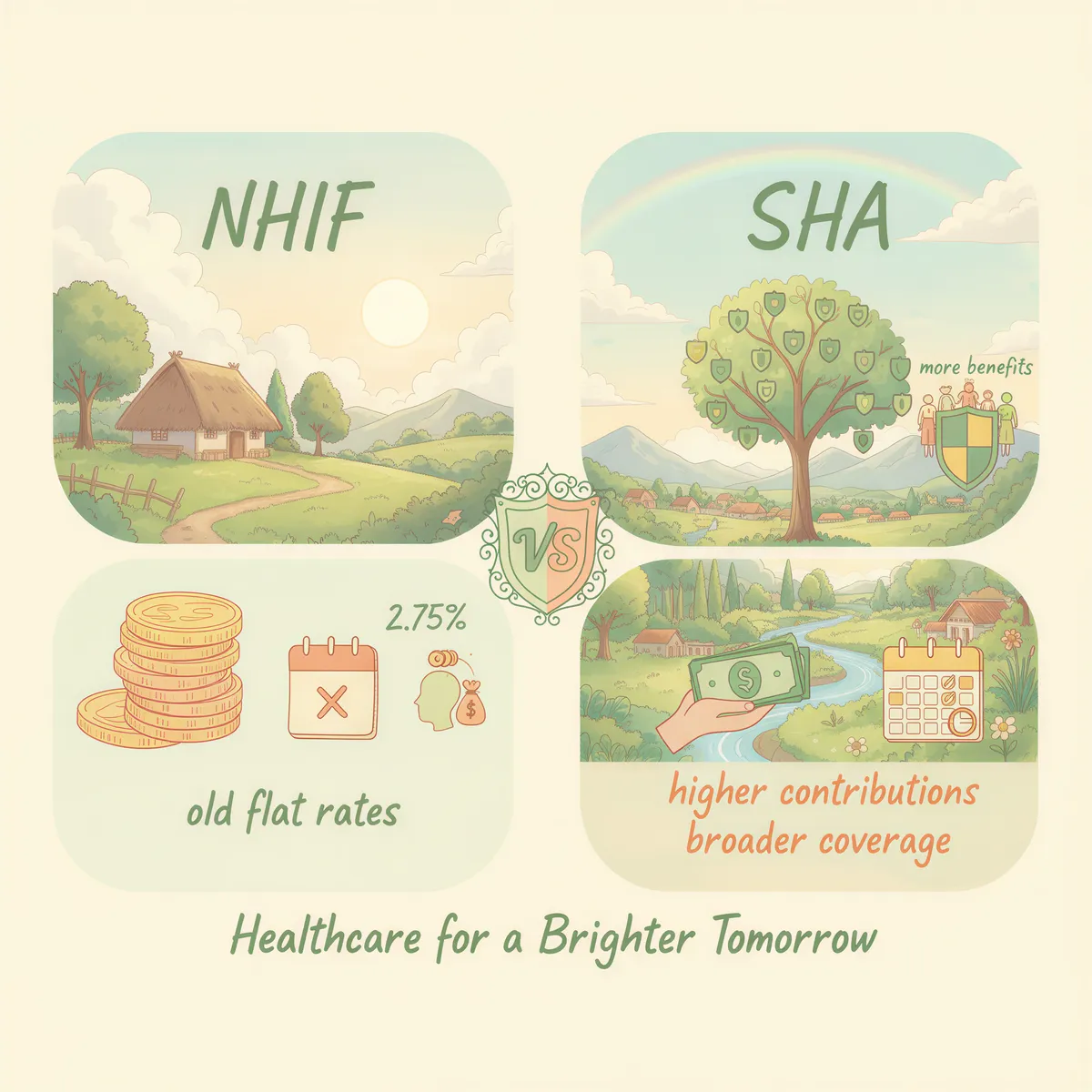
NHIF (National Hospital Insurance Fund) → SHA (Social Health Authority)
Same idea. New name. Better (in theory) coverage.
Key changes:
- Higher contributions (2.75% vs old flat rates)
- Supposed to cover more services
- Better hospital network
- Still mostly public hospitals
But here's what didn't change:
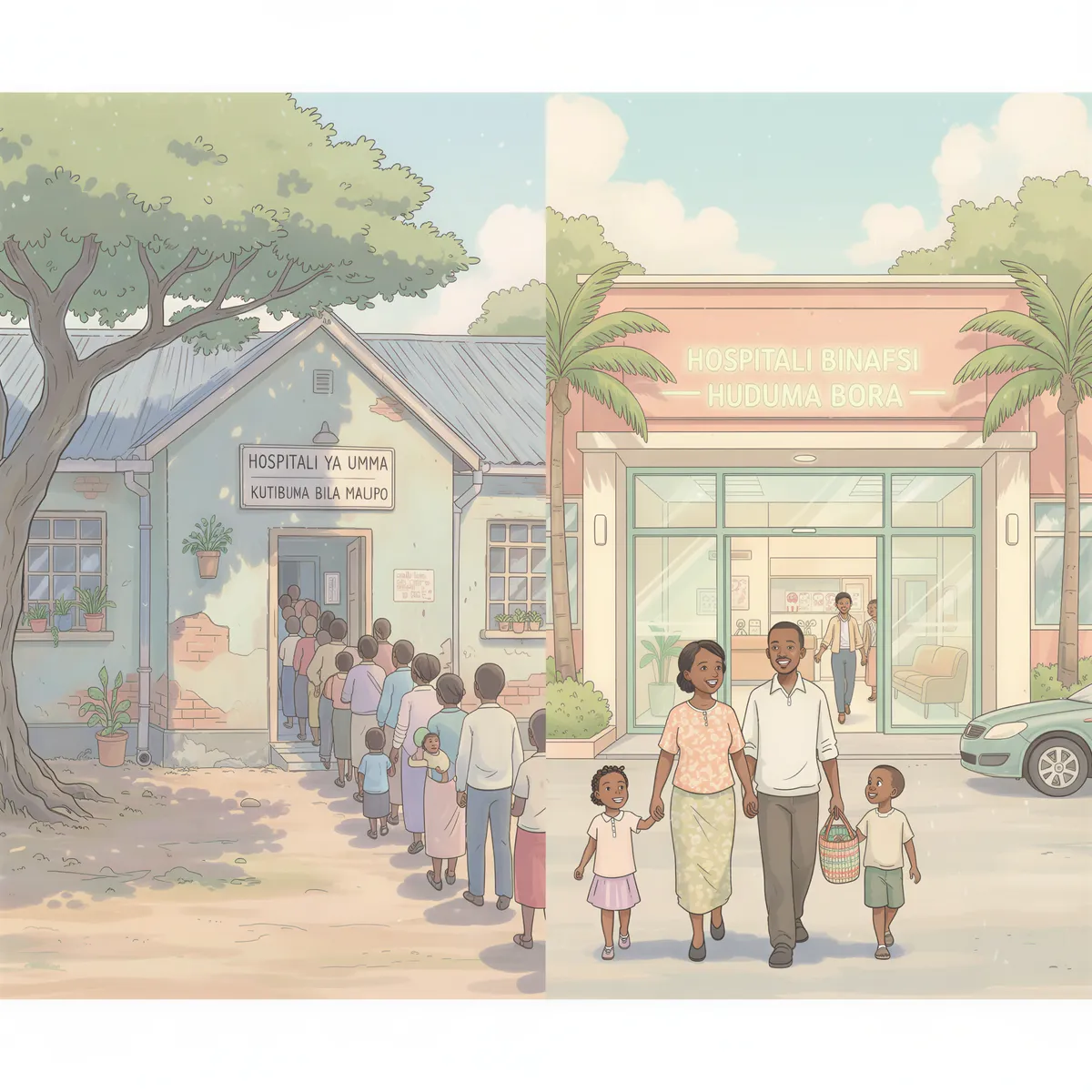
Long queues. Shared wards. Limited specialist access.
What SHA Actually Covers
Let's be clear about what you're paying for:
✔ Inpatient care in public hospitals ✔ Outpatient services at designated facilities ✔ Emergency care ✔ Maternity (basic) ✔ Some surgeries (with waiting lists) ✔ Chronic illness management
Sounds good, right?
Here's the catch.
The SHA Reality Check
Scenario 1: You need emergency surgery
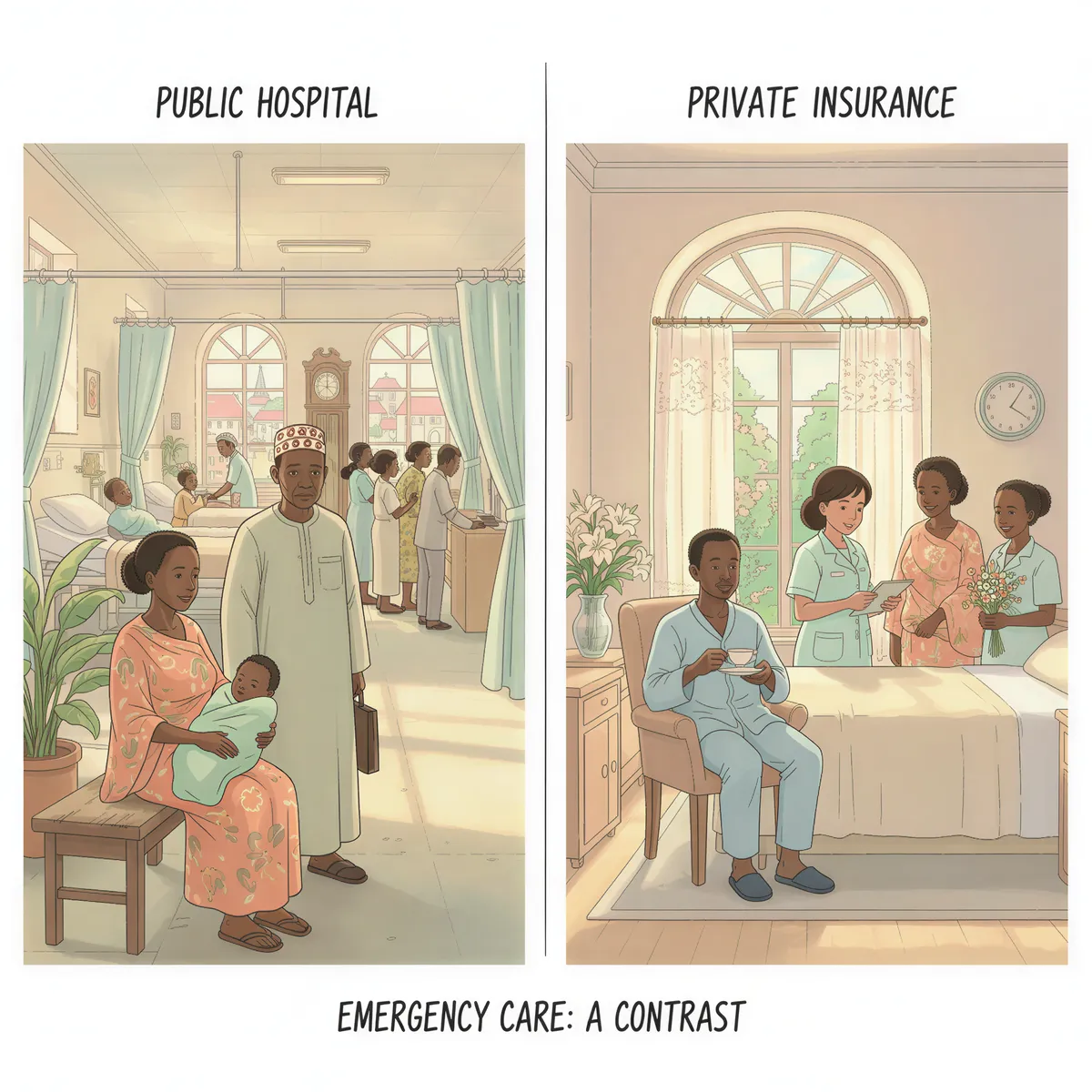
With SHA:
- Go to public hospital
- Wait 2-6 hours to be seen
- Shared ward with 6 other patients
- Limited visiting hours
- Surgery scheduled when slot available (could be days)
With private insurance:
- Private hospital within 1 hour
- Pre-approved and admitted fast
- Private room
- Surgery scheduled same day or next day
- Better post-op care
Which would you pick?
When SHA is Enough
Real talk: Some people don't need private insurance.
You're probably fine with just SHA if:
- You're young and healthy (under 30, no chronic conditions)
- You don't mind public hospitals
- You're on a tight budget (can't afford extra KES 30-60k/year)
- You have a strong emergency fund (KES 200k+ saved)
For everyone else? Private insurance makes sense.
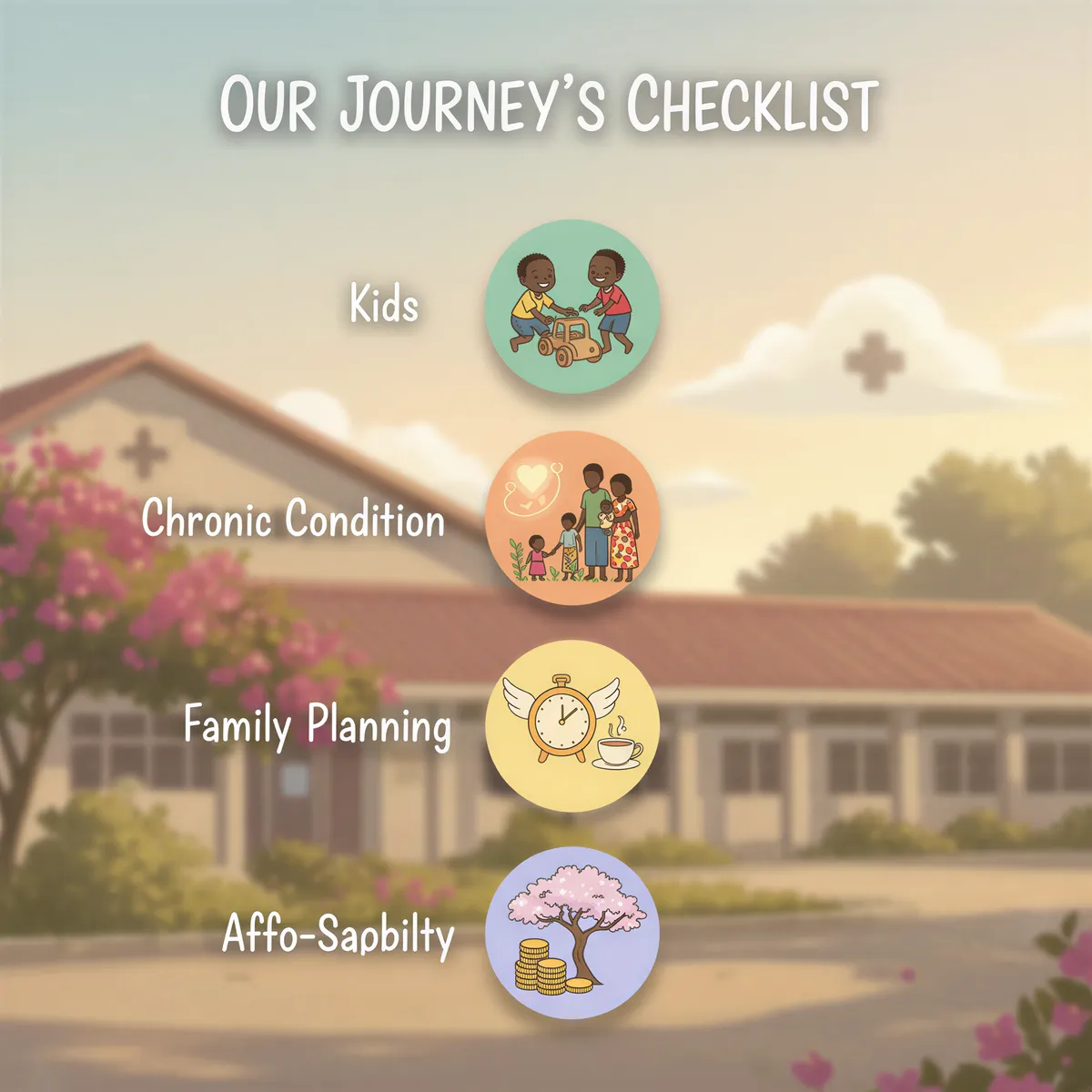
When You NEED Private Insurance
You definitely need it if:
-
You have kids
- Private hospitals = shorter wait times
- Better pediatric care
- Clean facilities
-
You're planning a family
- SHA maternity is basic
- Private gives you choice of hospital, doctor, private room
-
You have a chronic condition
- Diabetes, hypertension, asthma
- Private gives you faster access to specialists
-
You value your time
- 2-hour wait vs 6-hour wait
- Matters when you're in pain
-
You can afford KES 3,000-8,000/month
- If yes, private insurance is worth it
The Cost Breakdown
Let's talk numbers.
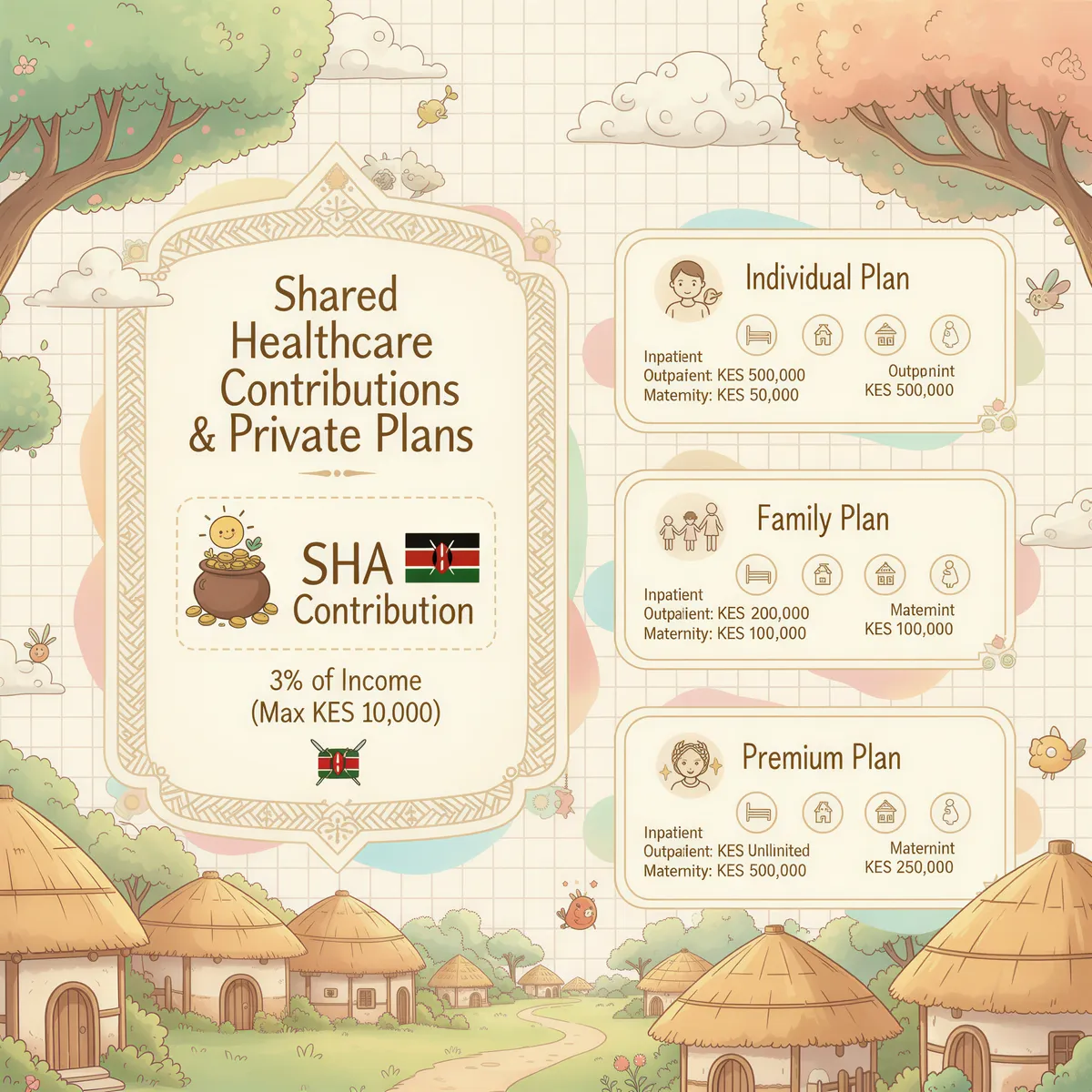
SHA Contributions (Mandatory)
Salary: KES 50,000/month SHA: 2.75% = KES 1,375/month = KES 16,500/year
Salary: KES 100,000/month SHA: 2.75% = KES 2,750/month = KES 33,000/year
You're paying this whether you like it or not.
Private Health Insurance (Optional)
Individual cover (inpatient only):
- KES 20,000 - 40,000/year
- Basic hospital network
- No outpatient
Family cover (inpatient + outpatient):
- KES 50,000 - 80,000/year
- 4 people covered
- Wider hospital choice
Premium plans:
- KES 100,000 - 200,000/year
- Unlimited network
- Specialist access
- International cover
The Smart Kenyan Strategy
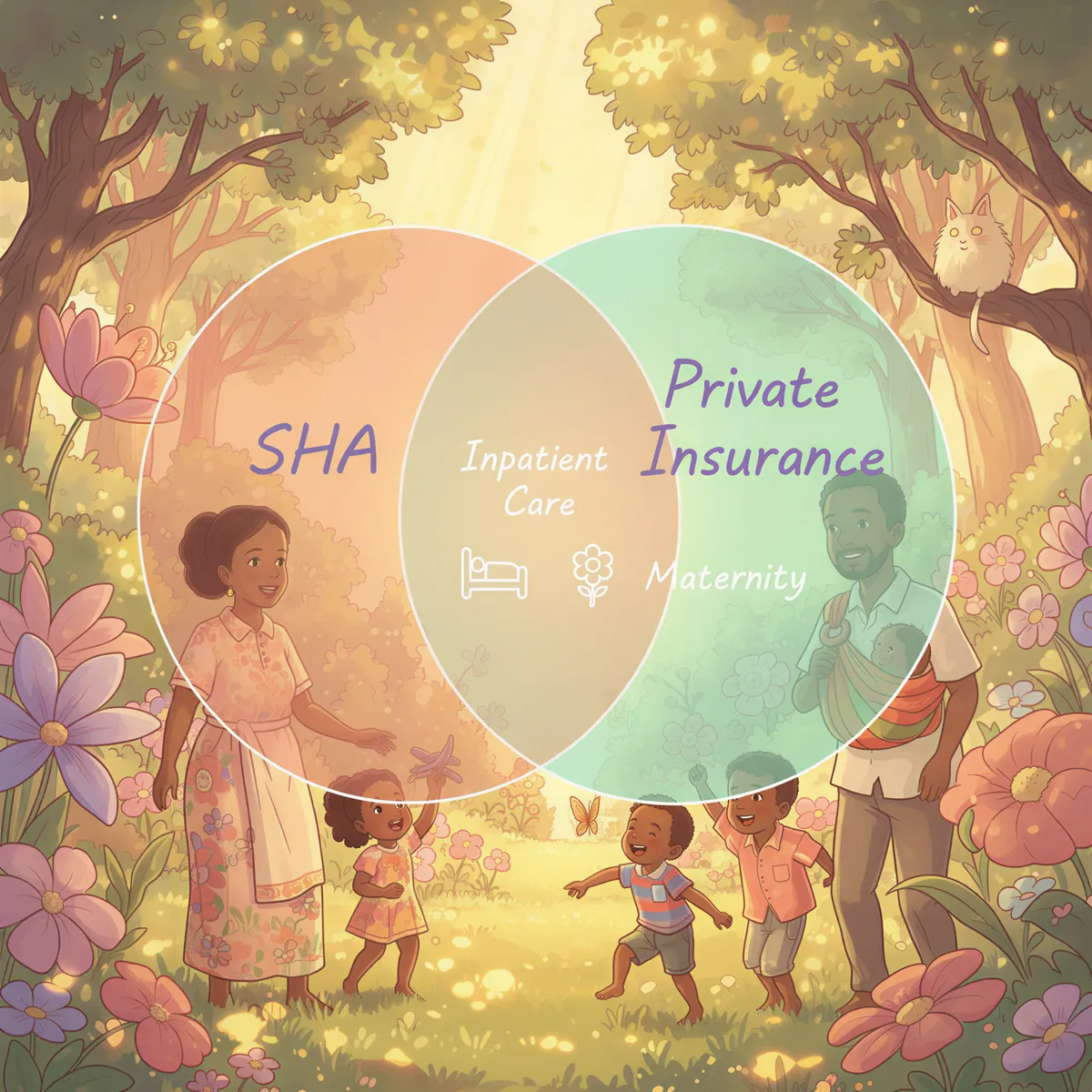
Don't think SHA or private insurance.
Think SHA plus private insurance.
Here's the stack:
Layer 1: SHA (mandatory)
- Use it for: basic outpatient, public hospital care, chronic medication
Layer 2: Private inpatient cover
- Use it for: emergencies, surgery, maternity, serious illness
Layer 3: Private outpatient (optional)
- Use it for: fast doctor visits, private clinics, specialists
Most people need layers 1 and 2. Layer 3 is a luxury.
Real-Life Scenarios
Scenario 1: Malaria
With SHA only:
- Public clinic
- 2-4 hour wait
- Generic medication
- Total cost: KES 0-500
With private insurance:
- Private clinic
- 30-minute wait
- Branded medication
- Total cost: KES 0 (covered)
Difference? Time and comfort.
Scenario 2: Childbirth
With SHA only:
- Public maternity hospital
- Shared ward (4-6 beds)
- Limited doctor choice
- Total cost: KES 0-5,000
With private insurance:
- Private maternity hospital
- Private room
- Doctor of your choice
- Total cost: KES 0-20,000 (most covered)
Difference? Privacy and experience.
Scenario 3: Car Accident (Emergency)
With SHA only:
- Public hospital ER
- Stabilization and treatment
- Shared ward
- Total cost: Low to zero
With private insurance:
- Private hospital
- Faster admission
- Private room
- ICU if needed
- Total cost: Covered up to limit
Difference? Speed and quality of care.
What Insurance Agents Won't Tell You
Lie #1: "Private insurance covers everything" Nope. Pre-existing conditions have waiting periods. Dental and optical are often extra.
Lie #2: "You don't need SHA if you have private insurance" Wrong. SHA is mandatory by law. You're paying both.
Lie #3: "Cheap private insurance is just as good" It's not. Cheap plans have limited networks and high co-payments.
Lie #4: "You can claim the same thing on both" Sometimes yes, but most private insurers deduct what SHA covers first.
The Honest Answer
Should you pay for both SHA and private insurance?
If you can afford it: Yes.
If you can't: Stick with SHA and build an emergency fund.
SHA keeps you from total financial disaster. Private insurance keeps you from suffering while sick.
Together, they're unbeatable.
How to Choose the Right Private Insurance
Don't overthink it.
Step 1: Decide your budget (KES 20k, 50k, or 100k/year) Step 2: List hospitals you'd want to use Step 3: Get quotes from 3-5 insurers Step 4: Compare what's covered (inpatient, outpatient, maternity, limits) Step 5: Pick the one with best hospital network in your budget
Done.
Bottom Line
SHA = Your safety net. Private insurance = Your upgrade.
You're paying for SHA anyway. The question is: Can you afford not to have private insurance?
Because when you're in a hospital bed, the last thing you want is:
- 6-hour ER waits
- Shared wards
- Limited doctor access
If KES 3,000-6,000/month buys you peace of mind, it's worth it.
Start Generating Quotes in Minutes
Compare quotes from Kenya's leading insurers and send a client a proposal in under a minute.
No credit card required.
Get quotes from 40+ underwriters in under 30 seconds.
All quotes meet Insurance Regulatory Authority standards.
Never miss a commission payment with automatic tracking.